Kitchen science
Why Does Popcorn Pop? What Happens Inside the Kernel
By Fede5 min readUpdated
In short
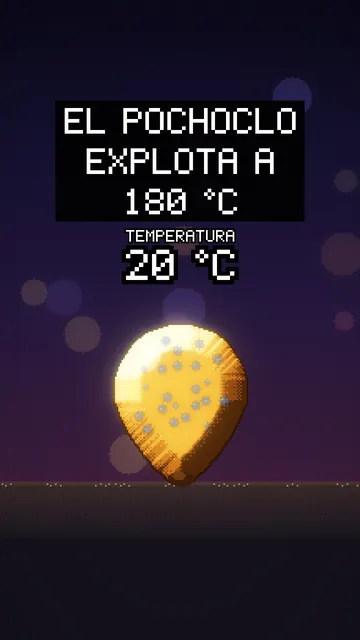
Popcorn pops because each kernel holds 13 % to 14.5 % water sealed inside a very tough hull. As it heats, the water turns to steam and the pressure climbs to about 10 bar while the starch softens. Around 180 °C (356 °F) the hull gives way, the steam puffs the starch up like a foam, and it sets firm as it cools.
That corn kernel that looks dry, hard as a little pebble, has water inside. And without that water, there'd be no popcorn. Everything that happens in the pot, from the first pop to that cloud shape you know, comes from a few drops of water sealed inside a very tough shell.
Here's what happens inside the kernel, why not just any corn works, and why there are always a few that don't pop.
What's inside a popcorn kernel?
Three things that matter:
- A hard shell, the pericarp, wrapped around the whole kernel.
- Starch, which fills almost all of the inside.
- Water, not much, but just enough. According to Bruce Hamaker, a food scientist at Purdue University, a kernel needs moisture making up 13 % to 14.5 % of its weight to pop well.
With less water, there's too little steam and the kernel can't build up force. That fine balance is what decides whether you get a big fluffy piece of popcorn or a burnt little pebble.
From water to pop, step by step
- The water turns to steam. As the pot heats up, the water inside starts turning into steam. Steam takes up far more space than water, and it wants out.
- The shell won't let it. The pericarp works like a pressure cooker the size of a kernel. Inside, the pressure reaches about 10 bar, roughly ten times the pressure of the air you breathe.
- The starch softens. With the heat and steam, the starch gelatinizes: it stops being hard and turns into a kind of paste.
- The shell gives way. In a study published in 2015 in the Journal of the Royal Society Interface, 96 % of the kernels popped at 180 °C (356 °F), compared with only 34 % at 170 °C (338 °F). When the shell breaks, the steam expands all at once and puffs the starch paste up like a foam.
- The foam sets. As it cools, that foam turns firm and crunchy, in the shape you know.
In that same study, the kernel goes from a radius of about 3.1 mm to 6.5 mm, more than twice as wide, and ends up about eight times less dense. It's mostly air with starch walls. If you want to see the jump in slow motion, millisecond by millisecond, I cover it in what temperature popcorn pops at.
Why doesn't any corn work?
Because not every shell can hold the pressure. Popcorn is made from a specific type of corn with a special hull. Hamaker's team found that the chemical structure of the pericarp, which is partly cellulose, is what matters most: the kernels that pop best have a stronger hull that seals in moisture better.
Other types of corn don't work the same way: in Indiana, one of the big U.S. corn states, Purdue notes that only popcorn pops and the rest can't. That's why corn on the cob from the produce aisle or the corn used for polenta won't do it.
Why are there always unpopped kernels?
There are always a few left at the bottom, and it's not your fault. According to Purdue, some kernels don't pop because they have cuts or weak spots in the hull: the steam escapes through them before it can build pressure.
The variety matters a lot too. In a study by that same team, unpopped kernels ranged from 4 % in the best variety to 47 % in the worst. In other words, with a bad batch of corn, almost half stay as pebbles no matter what you do.
And since moisture is key, it's a good idea to store your popcorn in a tightly sealed jar: if it dries out, it has less water to turn into steam.
Putting it to work in your pot
With the science in mind, my method makes sense:
- A big pot with a lid, over medium heat. The lid isn't optional, unless you want popcorn all over your kitchen.
- A little oil, whichever you like, swirling the pot so it coats the bottom.
- The kernels in a single layer, with none on top of another. That way they all get even heat from the bottom and pop at about the same time.
- Cover and shake the pot about once a minute. At first the kernels stick to the bottom; as they heat up, they slide around more easily.
- When the pops start to slow down, take it off the heat. If you wait for every last one, the first ones burn.
The full step-by-step is in my popcorn recipe.
Sweet and crunchy
If you add caramel sauce, stir well so every piece gets coated. They'll be a little sticky. If that bothers you, bake them at 120 °C (248 °F) for 30 to 45 minutes on parchment paper so they don't stick to the tray, and they come out nice and dry.
Next time you hear that first pop, you'll know what just happened: a tiny pressure cooker, with water and starch inside, just gave way.
Frequently asked questions
Why doesn't regular corn pop?
Because its hull doesn't trap steam the way popcorn's does: popcorn has a stronger pericarp that seals in moisture better.
How much water is in a popcorn kernel?
To pop well, it needs moisture making up 13 % to 14.5 % of its weight, according to Purdue University.
Why do some popcorn kernels burn without popping?
Because they have cuts or weak spots in the hull that let the steam escape, or because the corn has dried out and doesn't have enough water to build pressure.
How do you keep caramel popcorn from being sticky?
Bake it at 120 °C (248 °F) for 30 to 45 minutes on parchment paper: it dries out and turns crunchy.
Related recipes
Sources
The facts in this post come from these sources (checked when it was written).
- Cómo hacer pochoclo — Fede Cocina (YouTube) (2021)
- What's under the shell of this popular snack? — Purdue University, College of Agriculture (Chad Campbell) (2020)
- Popcorn: critical temperature, jump and sound — Journal of the Royal Society Interface (Virot y Ponomarenko) (2015)
- The Chemistry Of Popcorn: It's All About 'Pop-Ability' — ScienceDaily (Purdue University) (2005)