Common mistakes
Why Do My Cookies Spread and Melt Into One Big Cookie?
By Fede5 min readUpdated
In short
Cookies spread when the butter goes into the oven too warm: it melts and runs before the cookies have time to set. If your dough got soft for that reason, don't add flour, because the cookies come out dry and hard. Chill it for 30 to 60 minutes and bake it straight from the fridge, in a fully preheated oven, on a cool baking sheet.
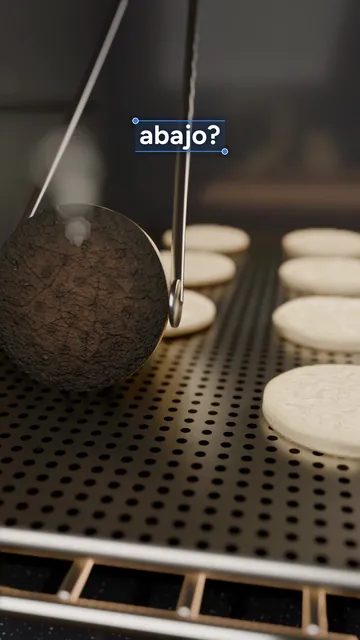
You set the dough balls well apart on the baking sheet, closed the oven, and ten minutes later you have one single cookie the size of the sheet. And the dough had warned you: it was soft, sticky, impossible to roll into balls.
What almost everyone does at that point is add flour. I read it all the time in the comments on my videos: the dough came out soft, so the fix was to keep adding flour. But most of the time, what that dough is missing isn't flour. It's cold.
Why do cookies spread in the oven?
Because of the butter. If it goes into the oven too warm, it melts and runs before the cookie has a chance to set. The dough goes along with it, and the balls stretch out until they touch.
Butter is fully melted at about 38 °C (100 °F). That's the temperature the UK's National Health Service already considers a fever. In other words, your butter melts with a fever. In a hot kitchen, or if you softened it too much in the microwave, it reaches the oven almost liquid.
Adding flour doesn't fix it
If the dough is soft because the butter is nearly melted, extra flour firms it up for a while, but it doesn't remove the problem: the butter is still warm. And it gives you a new one: according to King Arthur Baking, a little too much flour can be the difference between a fudgy, chewy cookie and a dry, cakey one. With even more flour, they come out dry and crumbly.
There's one exception. King Arthur also says that not using enough flour makes cookies spread too much. That happens when you measure by volume instead of weighing: the amount changes a lot depending on how you fill the measure. If you weighed your flour and the dough is still soft, the problem is temperature. And if you overdid the flour, here's why your cookies come out hard.
The fix: the fridge
When the dough is cold, the butter takes longer to melt in the oven, and that gives the cookie time to set before it spreads.
- Shape the balls. If the dough is too sticky to handle, chill it in the bowl for a bit first, then shape them.
- Put them on the baking sheet and refrigerate for 30 to 60 minutes.
- Meanwhile, turn on the oven: it should be fully hot when they go in.
- Bake straight from the fridge, without letting them warm up.
King Arthur puts it this way: 30 to 60 minutes in the refrigerator does wonders, and you can bake the cookies right out of the fridge.
How soft should the butter be?
When a recipe calls for softened butter, it doesn't mean melted. According to America's Test Kitchen, ideal softened butter is 18 to 19 °C (65 to 67 °F): it bends easily without breaking and gives slightly when you press it. King Arthur describes it the same way: pliable, but cool to the touch. If it's shiny, pasty, or warm when you touch it, it's gone too far.
| Butter | Temperature | What it's like |
|---|---|---|
| Straight from the fridge | about 2 °C (35 °F) | hard |
| Softened | 18 to 19 °C (65 to 67 °F) | bends without breaking, gives a little when pressed |
| Fully melted | about 38 °C (100 °F) | liquid |
For my vanilla cookies and almost any cookie made by creaming butter with sugar, the middle row is what you're after.
Other reasons cookies come out flat
Warm butter is the most common cause, but not the only one. King Arthur Baking lists these too:
- The oven wasn't preheated. In a lukewarm oven, the fat melts before the cookie sets, just like with warm butter.
- A greased baking sheet. Greasing the sheet just adds more fat to the cookie. Use parchment paper or a silicone mat instead.
- A hot sheet between batches. If you put dough on a sheet fresh out of the oven, it starts spreading before it even goes in. Let it cool completely between batches.
- Too much sugar or liquid. It throws off the balance between wet and dry.
- Eggs bigger than the recipe calls for. They add liquid.
- Expired baking powder or baking soda. It can make cookies spread so much they all bake together.
The short rule: if the dough is soft, it's not missing flour, it's missing cold. Half an hour in the fridge, a hot oven, a cool sheet, and every ball comes out as its own cookie.
Frequently asked questions
How long should you chill cookie dough?
30 to 60 minutes in the fridge is enough. You can bake it straight from there, without letting it warm up.
Should you grease the baking sheet for cookies?
Better not: grease on the sheet makes cookies spread more. Use parchment paper or a silicone mat.
Can I use the same baking sheet for the second batch?
Yes, but let it cool completely first. A hot sheet warms the dough and the cookies start spreading before they go into the oven.
What temperature should butter be for cookies?
Softened, not melted: 18 to 19 °C (65 to 67 °F). It should bend without breaking and give slightly when pressed, without looking shiny or feeling warm.
Why did my cookies come out flat if the dough was firm?
It could be an oven that wasn't preheated, a hot or greased baking sheet, too much sugar or egg, or expired baking powder.
Related recipes
Sources
The facts in this post come from these sources (checked when it was written).
- Why are my cookies spreading? — King Arthur Baking (Annabelle Shippee) (2023)
- Why did my cookies come out flat? — King Arthur Baking (Annabelle Shippee) (2024)
- Make your best cookies with these 10 tips — King Arthur Baking (Rossi Anastopoulo) (2023)
- A digital kitchen scale is an essential baking tool — King Arthur Baking (PJ Hamel) (2022)
- Understanding Ingredients for the Canadian Baker, 3.3: Fats (Table 8, Melting Points of Typical Fats) — BCcampus (LibreTexts)
- High temperature (fever) in adults — NHS (Reino Unido)
- Butter Temperature 101 — Cook's Illustrated (America's Test Kitchen)