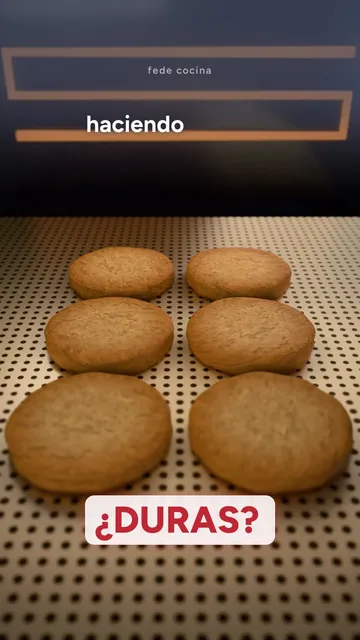
Common mistakes
Why You Shouldn't Cut Bread Right Out of the Oven
By Fede4 min read
In short
Fresh out of the oven, bread isn't done cooking yet: it's full of steam and excess moisture, and the crumb only sets as it cools. If you cut it hot, the steam escapes all at once, the crumb turns dense or gummy, and the bread dries out sooner. Let it cool on a wire rack: about 45 minutes for a small loaf, a couple of hours or more for a big one.
It comes out of the oven, smells incredible, crackles when you squeeze it. And you reach straight for the knife. I know: warm bread is one of the best things there is.
But you're ruining it. And it's not a baker's quirk: there's an explanation, and you can see it in the crumb.
Bread fresh out of the oven isn't finished
When you take it out of the oven, the bread is actually only partly cooked. Paul Adams, a food science expert at America's Test Kitchen, puts it this way: before it's cooled properly, bread is effectively undercooked. The crumb is sticky and the flavor is muted.
The problem is excess free moisture inside the loaf. The cooking finishes as it cools: that's when the crumb sets and takes its final shape.
What happens inside as it cools
While it bakes, the starch in the flour absorbs water and softens. That's why a hot crumb is so soft, almost like a paste.
As it cools, the opposite happens: the starch rearranges and firms up a bit, a process called retrogradation. According to Tasting Table, citing Cook's Illustrated, it's the stage where the crumb gains its structure. At the same time, the steam left inside escapes little by little.
What happens if you cut it hot
You open a huge hole for the steam to escape all at once. And that has two consequences:
- The crumb gets tight. Stephanie Pixley of America's Test Kitchen explains that if you cut into a hot loaf, the texture ends up denser, and depending on the bread, it can veer toward gummy.
- The bread dries out sooner. Tasting Table warns that besides turning gummy, slicing too soon can also do the opposite and dry out your bread, because it suddenly loses the moisture that should have stayed inside.
In other words, the worst of both worlds: gummy today and dry tomorrow.
How to cool it properly
Always on a wire rack
Don't set it on the counter or the baking sheet. On a rack, air circulates around the loaf and the bottom stays dry: otherwise, the steam coming out underneath condenses and leaves you with a damp, soggy bottom.
For a yeasted pan loaf, America's Test Kitchen recommends leaving it in the pan for about 15 minutes so it keeps its shape, then moving it to the rack.
How long?
Sources don't agree here, because it depends a lot on the size and type of bread:
| Bread | Cooling time | According to |
|---|---|---|
| A standard loaf, most of them | About 45 minutes | Tasting Table |
| A whole loaf, before slicing | About 3 hours | America's Test Kitchen |
| Crusty breads | From 2 hours | Gareth Busby, Busby's Bakery School |
| Dense whole grain loaves | Up to 6 hours | Gareth Busby |
| Quick breads without yeast, like scones | 5 to 10 minutes | America's Test Kitchen |
My rule: a small loaf, at least 45 minutes. A big one, a couple of hours. And quick breads, like scones, can be eaten almost right away.
What if you want it warm?
I get it. The trick is to let it cool completely and then warm it for a few minutes in the oven. That way you get a set crumb and a crisp crust, without paying the price of cutting it hot.
Afterward: how to store it
Once it's cool, another classic mistake is putting it in the fridge. America's Test Kitchen measured it: in the fridge, a loaf of rustic bread goes stale within a day, about twice as fast as at room temperature.
Stale bread is the same retrogradation taken to the extreme: the starch molecules crystallize and lock away the crumb's water, leaving the bread hard and dry. Fridge cold speeds that up.
If you won't eat it within a day or two, use the freezer instead: America's Test Kitchen recommends wrapping it tightly in aluminum foil, then putting it in a zipper-lock bag, and freezing it for up to a month. It keeps far longer there than on the counter or in the fridge.
If you want to try this with a bread that always works, go with my sandwich bread. And if what worries you is mold, I cover that in moldy bread.
Frequently asked questions
Why is my homemade bread gummy inside?
Often because it was cut while hot: the crumb hadn't set yet and the steam escaped all at once. It can also be underbaked.
Should you store bread in the fridge?
Better not: in the fridge it goes stale about twice as fast as at room temperature. If you won't eat it soon, freeze it.
How long does bread last in the freezer?
Wrapped tightly in aluminum foil and sealed in a zipper-lock bag, up to a month.
How do you warm bread without it turning gummy?
Let it cool completely first, then warm it for a few minutes in the oven.
Related recipes
Sources
The facts in this post come from these sources (checked when it was written).
- Cooling Cakes and Cookies Is About More Than Not Burning Your Tongue — America's Test Kitchen (Caren White) (2024)
- Why You Shouldn't Slice Into Fresh Baked Bread Before It's Cool — Tasting Table (Autumn Swiers) (2023)
- Don't Refrigerate Baked Goods — America's Test Kitchen (Liz Bomze) (2023)