Kitchen science
What Happens to Sugar When It Turns Into Caramel?
By Fede4 min readUpdated
In short
When you make caramel, sugar doesn't melt like ice: it breaks down. Sucrose splits into glucose and fructose, and those pieces break apart and recombine into hundreds of new compounds: some bring aroma, others acidity or bitterness, one (diacetyl) tastes like butter, and others bond into brown molecules that give caramel its color. Sucrose starts caramelizing at around 170 °C (338 °F).
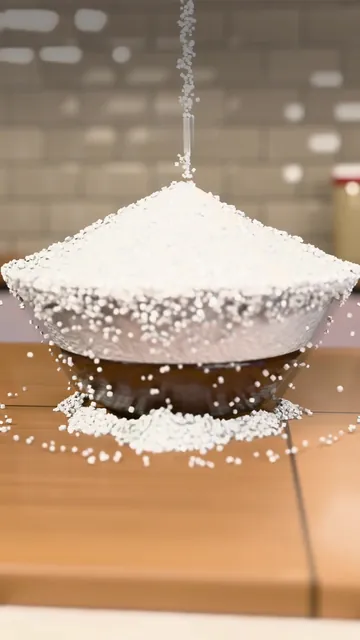
You put sugar in a pan, heat it, and a few minutes later you have an amber liquid that makes the whole house smell amazing. It looks like the sugar melted, like an ice cube.
But it didn't. What happens in that pan is a chemical transformation: one single ingredient turns into hundreds of new compounds. And understanding that helps your caramel turn out right.
Does sugar melt?
That's what almost everyone thought. In 2011, a team at the University of Illinois measured it with liquid chromatography, a technique that separates and identifies the substances in a mixture. They wanted to know whether sugar was still sugar after it "melted."
It wasn't. The lead scientist, Shelly Schmidt, summed it up: as soon as they detected melting, sucrose breakdown products started showing up. On top of that, the point where it "melted" changed depending on how fast they heated it, which doesn't happen with a solid that truly melts.
An ice cube that melts is still water. Sugar that turns liquid in the pan is already turning into something else.
Step by step: from sugar to caramel
The white sugar in your kitchen is sucrose: colorless, odorless little crystals whose only trait is a sweet taste. Here's what heat does:
- It splits in two. Sucrose separates into two smaller sugars, glucose and fructose.
- It breaks and rebuilds. Those pieces keep breaking apart and recombining in new ways. According to the University of Guelph, in Canada, hundreds of new aromatic compounds form, and that's where the complex flavor and aroma come from.
- It takes on color. Some of those compounds bond into huge brown molecules. They have very caramel-like names: caramelans, caramelens, and caramelins.
- It turns bitter. If the reaction keeps going unchecked, the caramel loses its sweetness and becomes bitter.
What's in caramel
| Compound | What it brings |
|---|---|
| Diacetyl | A buttery flavor, even though there's no butter in it |
| Furans | Nutty notes |
| Acetic acid, the acid in vinegar | A touch of acidity |
| Caramelans, caramelens, and caramelins | The brown color |
Diacetyl is my favorite: it tastes like butter, and in caramel it shows up on its own, from sugar and nothing else.
What temperature does caramel form at?
Each sugar caramelizes at a different temperature. The University of Guelph gives these values: fructose starts around 110 °C (230 °F), glucose around 150 °C (302 °F), and sucrose, regular table sugar, around 170 °C (338 °F). In King Arthur Baking's chart, the caramel stage is 160 °C (320 °F).
I work it roughly between 165 and 185 °C (329 and 365 °F), depending on how dark I want it. But color is the best thermometer: light gold for a mild caramel, amber for flan, and darker only if you want that bitter edge.
A fun fact from the Illinois researchers: since what really matters is the breakdown, you could make caramel by holding sugar at a lower temperature for a longer time.
Dry caramel or wet caramel
There are two ways to do it, and King Arthur explains them well:
- Wet: sugar with a little water, cooked together. It's slower but easier to control. Once it boils, don't stir it: stirring can make the sugar crystallize and turn grainy.
- Dry: just sugar in the pan, until it liquefies and browns. It's faster but trickier: without liquid, it caramelizes very quickly and can burn before you realize it. If the heat is too high, some of it caramelizes before the rest melts, and it turns out grainy.
Why caramel burns so easily
Because the color moves fast, and because the hot pan keeps cooking it after you take it off the heat. That's why King Arthur recommends pulling it when it's a shade or two lighter than you want, or stopping the cooking by setting the pan in an ice water bath.
And watch out for burns: when you add cream or butter, caramel bubbles up furiously. Use a pan with plenty of room, warm the liquids first (cold ones splatter more), and don't taste it until it's cool.
Caramelizing isn't the same as browning
Caramelization is a reaction of sugars alone. What browns meat, bread, or a pancake is something else: the Maillard reaction, which happens between sugars and amino acids, the building blocks of proteins.
When you make caramel, you're not melting sugar: you're turning one compound into many. To put it into practice, start with my caramel sauce or some garrapiñadas, Argentine candied peanuts. And if yours comes out a little bitter, a pinch of salt helps: here's why, in salt in sweet recipes.
Frequently asked questions
Why does caramel turn bitter?
Because if the reaction keeps going, caramel loses its sweetness and bitter compounds take over. The darker it gets, the more bitter it is.
Why does caramel crystallize or turn grainy?
In wet caramel, from stirring once it boils. In dry caramel, from heat that's too high: some of the sugar caramelizes before the rest melts.
How do you stop caramel from cooking?
Take it off the heat a shade or two before your target, since it keeps darkening, or set the pan in an ice water bath.
Can you make caramel without a thermometer?
Yes: go by color. For dry caramel, take it off the heat as it approaches a reddish-brown, because it keeps darkening in the pan.
Related recipes
Sources
The facts in this post come from these sources (checked when it was written).
- Sugar doesn't melt -- it decomposes, scientists demonstrate — ScienceDaily (Universidad de Illinois) (2011)
- Caramelization and Maillard Reaction — Rogers Lab, Universidad de Guelph
- How to make caramel — King Arthur Baking (Rossi Anastopoulo) (2022)